

It’s a Wonderful Holiday Message from Executive Director Susan Kerns
Dear Milwaukee Film Community,
It’s my last Executive Director spotlight of the year, and I’ve chosen to write about a film I’m sure most of you have seen: IT’S A WONDERFUL LIFE. Watching the trailer at the Oriental Theatre reminded me of its power, so here we are.
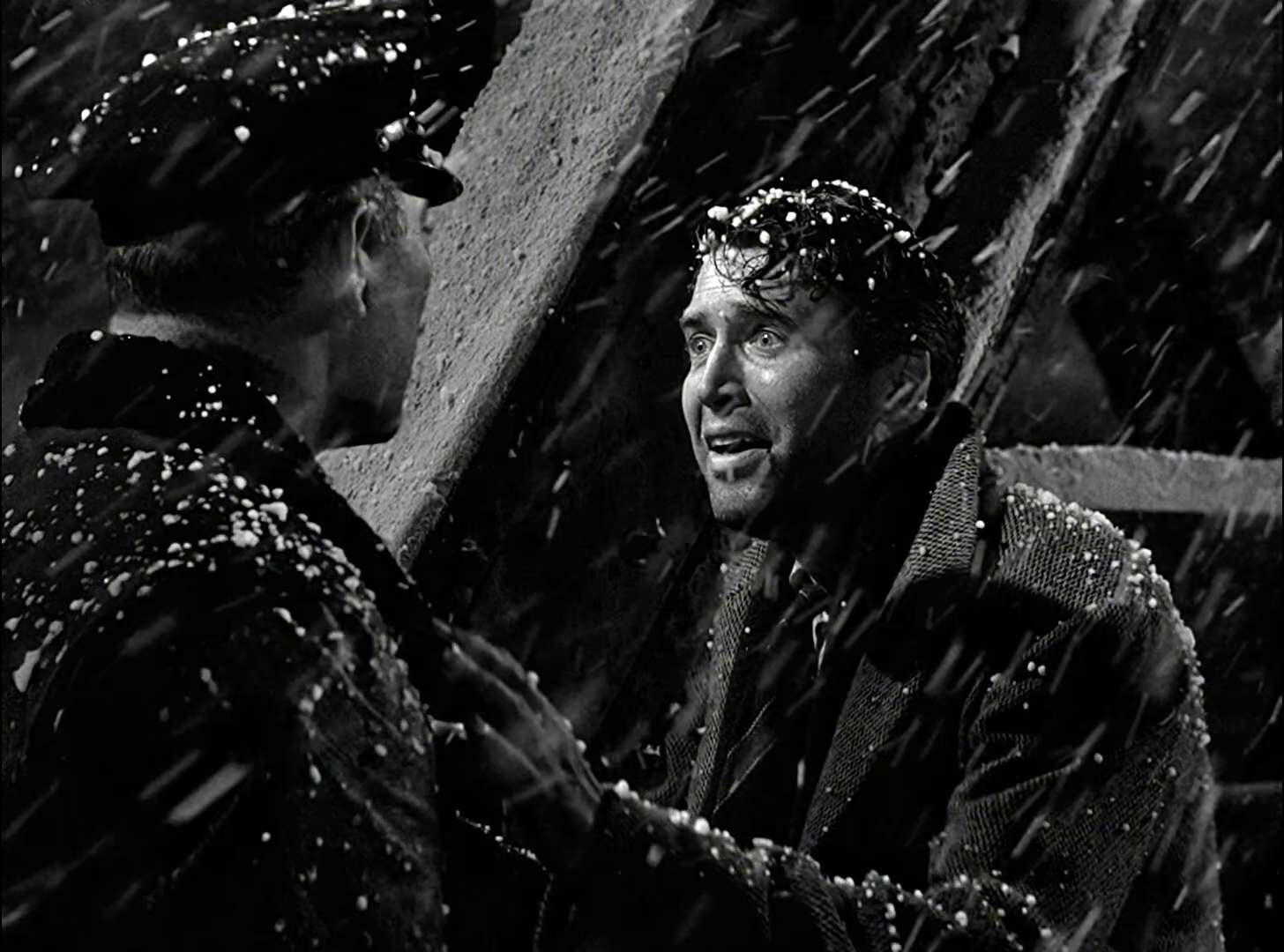
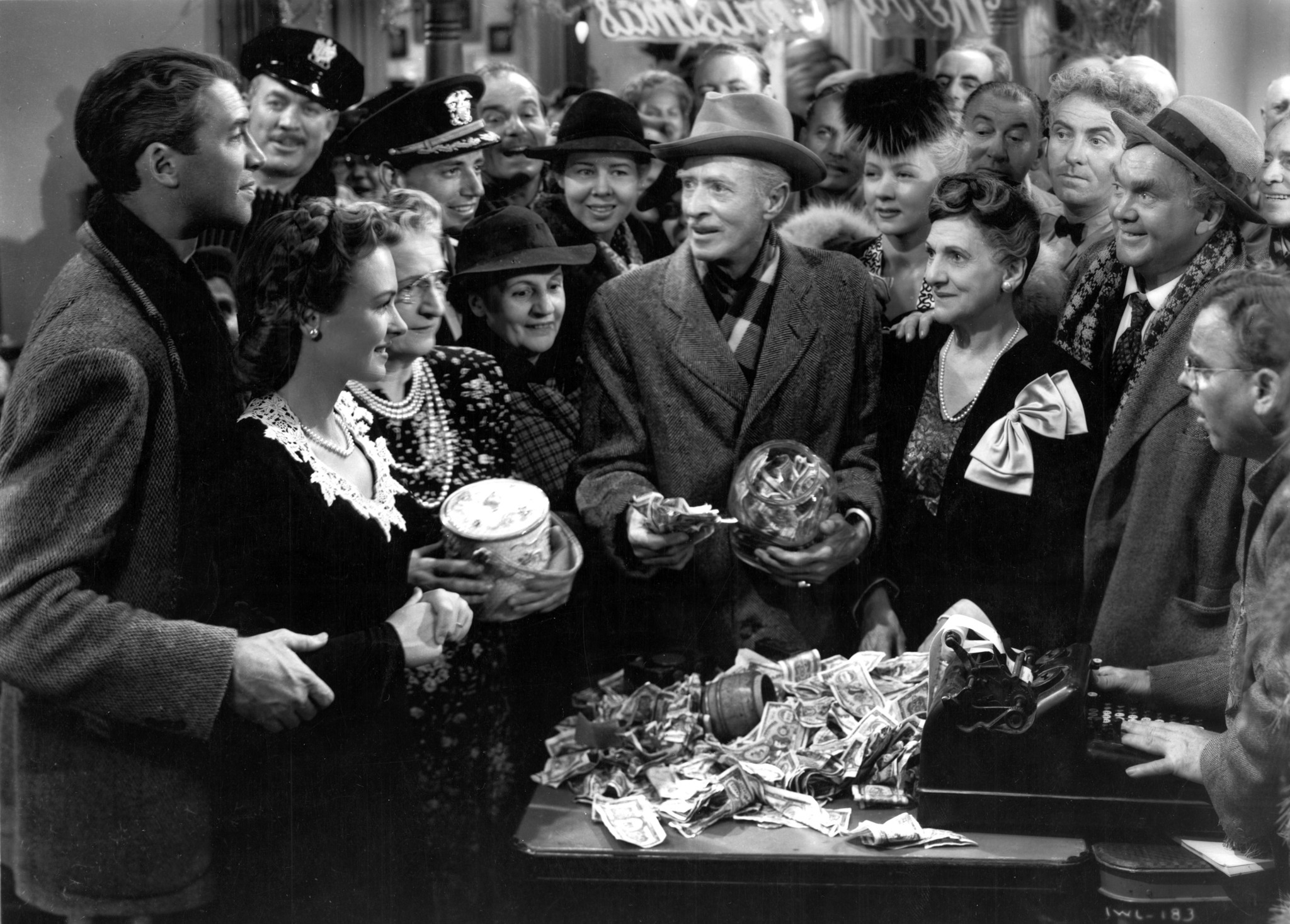
More than just a favorite Christmas movie, IT’S A WONDERFUL LIFE is one of the great pieces of populist American cinema, by one of the best American directors, Frank Capra. There’s so much to love about this film: the actors are charming, every character feels fleshed out in unique ways, and the cutting-edge snow effects are stunning (you can read more about that here). What I find most effective though, and I promise this is not a spoiler, is that despite its happy ending, the villain does not have a change of heart. The community bands together for change rather than waiting for one powerful guy at the top to suddenly embrace a different value system. This choice is uncommon for Hollywood films, and you can imagine a lesser version of this story where that character arrives to save the day. As is, the film reminds us that people need to look out for one another. Whether you have seen this film numerous times at home or have never seen it at all, it’s a perfect film for viewing on the big screen together.
Production History and Reception
It’s a Wonderful Life was not an immediate hit. I’d always been told the film was based on a Christmas card, but even that story has a roundabout start. After struggling to get his A Christmas Carol-inspired short story “The Greatest Gift” published, author Philip Van Doren Stern crafted it into a Christmas card sent to friends and, shrewdly, industry contacts. Van Doren had worked with presses to resize books to fit into military uniform pockets, so he thought, why not take a similar approach to distributing his own work? One copy of his 21-page Christmas card reached RKO Pictures, who bought the motion picture rights but never made the film. Eventually, Liberty Films, an independent company founded by Frank Capra, produced the project, creating the film we know and love today. It was one of only two films Liberty Films made.
Writing for The Hollywood Reporter in 1946, Jack D. Grant says, “It’s a Wonderful Life is a wonderful title for a motion picture about which practically everyone who sees it will agree that it’s wonderful entertainment. The film marks Frank Capra’s first production since his return from distinguished war service, and he has invested it with the tremendous heart that always stamps his offerings as above average. This couldn’t be anything other than a Capra picture, the humanness of its story the dominant factor at every turn of situation. … When Capra is at his best, no one can top him.”
Yet the film received mixed reviews and was a box-office disappointment, in part because audiences found it too dark. Although it was nominated for five Academy Awards, including Best Picture, its CURRENT reputation as one of the greatest films of all time was only solidified due to a rights snafu that landed It’s a Wonderful Life in the public domain in the 1970s. This allowed television stations to air the film frequently and repeatedly during the holiday season without licensing it or paying royalties, securing the film’s legacy. People who had seen it in the theaters got the chance to rewatch and reassess, while new audiences watched it simply because it was on.
From Dark to Light
Jimmy Stewart starred in dozens of films prior to this one, including Frank Capra’s MR. SMITH GOES TO WASHINGTON and YOU CAN’T TAKE IT WITH YOU, yet It’s a Wonderful Life carries the weight of both men returning to Hollywood filmmaking after WWII. (Stewart had enlisted in the Army Air Corps, and Capra turned his attention to WHY WE FIGHT.) These historical extra-textual elements can be perceived in the intensity of Stewart’s performance, which feels more emotionally laden than his earlier works. His highs seem higher, his anger easier to trigger, his desperation more closely linked to despair.
This characterization also reflects the psychological complexity Capra brought to the original story. He added George Bailey’s extensive backstory, the entire Mr. Potter character, and of course the film’s populist themes. George’s resulting embodiment of Bedford Falls itself makes the film’s ending that much more meaningful.
AnnieI’ve been saving this money for a divorce, if ever I got a husband.
Finally, and though I have no actual proof of this, I choose to believe Dorothy Parker’s script-polishing work added depth to the film’s women. Violet (Gloria Grahame) and Annie (Lillian Randolph) both have lines fit for a Parker poem, and Mary’s nightmare existence as a glasses-wearing librarian makes sense as a Parker joke. After all, men seldom make passes at girls who wear glasses.
I hope you enjoy the film, and as always, if you see me in the theaters, please say hello! AND happy new year from all of us at Milwaukee Film! Thank you for making 2025 an absolute blast!
Susan Kerns